Self Storage Rental Agreement: What to Include, and How Renters Sign It Online
· Storagely · 5 min read · Updated
What a self storage rental agreement should include: rent and fees, prohibited uses, lien rights, insurance and liability, and how renters sign it online.
This guide is general information, not legal advice. Self storage law varies by state. Have your rental agreement reviewed by an attorney who knows your state's self storage lien law.
A self storage rental agreement (often called a storage unit lease or rental contract) is the document that sets the terms between your facility and each renter: what they're renting, what they pay, what they can store, and what happens if they don't pay. It's also what protects your right to enforce your lien if a tenant defaults.
This guide lists what most rental agreements include, explains the terms operators ask about most, and shows how renters can sign the agreement online as part of the rental.
Rental agreement, lease or contract: what's the difference?
In self storage, the three names usually mean the same document. Many agreements describe the arrangement as a license to store property rather than a residential tenancy. That distinction matters, so the wording should come from your attorney.
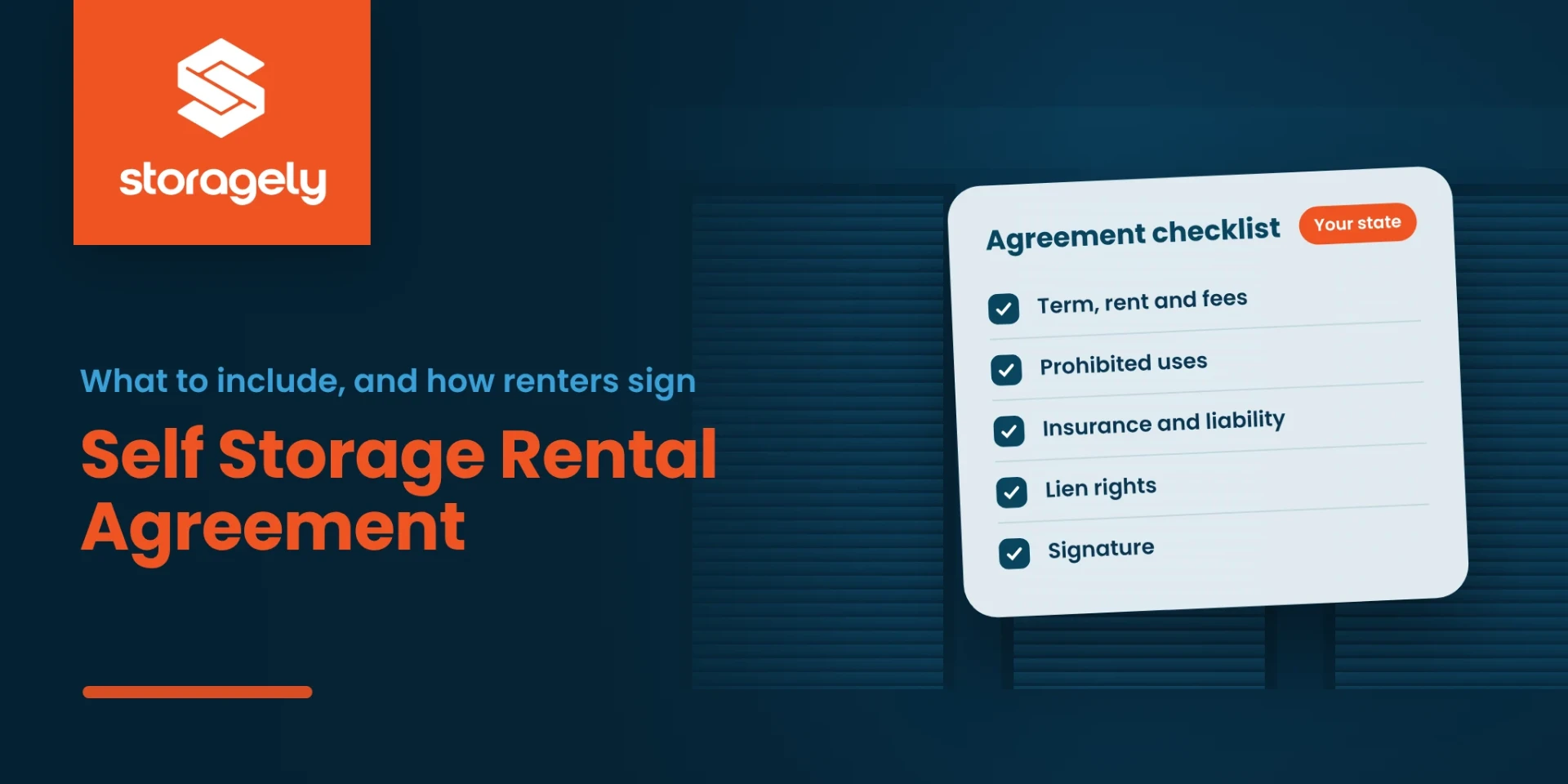
What to include: a checklist
| Section | What it covers |
|---|---|
| The parties and the unit | The operator's and the renter's names, and the unit number |
| License to store, not a tenancy | A statement that the renter is storing property, not renting a place to live |
| Term and rent | Usually month to month, with the monthly rent, the due date and accepted payment methods |
| Fees | Late fees, returned payment fees, and denial of access for nonpayment |
| Rate changes | How and when rent can change, and how much notice the renter gets |
| Prohibited uses | No living or sleeping in the unit, and no hazardous materials, food, animals or other banned items |
| Insurance and liability | That the operator doesn't insure the renter's property, the renter's insurance or protection requirement, and any limit on the operator's liability |
| Default and lien rights | A reference to your state's self storage lien law, and the steps you'll follow if rent isn't paid |
| Termination | How either side ends the agreement, and what happens with defaults that aren't about rent |
| Notices and contact consent | How you'll contact the renter, including consent to calls and texts and how to opt out |
| Disputes | How disputes are handled, if your attorney recommends an arbitration clause |
| Signatures and date | The renter's signature and the date they agreed |
Based on Key Legal Provisions Every Self-Storage Rental Agreement Should Include by attorney Scott Zucker, Inside Self-Storage.
The terms operators ask about most
- Lien rights. If a tenant stops paying, your state's self storage lien law sets out what you can do and the notices you must send. The agreement should point to that law, and your process should follow it exactly.
- Insurance and protection. Many operators require renters to have coverage for their stored belongings, either their own insurance or a protection plan. Ask your attorney how your state treats each option.
- Rate changes. Renters are more likely to accept an increase they were told to expect. Say how rate changes work in the agreement.
- Contact consent. If you'll text renters about payments, gate codes or notices, get their consent in the agreement and give them a way to opt out.
Keep one agreement, in one place
Most facility management software (FMS) stores your lease template and creates each renter's agreement. Keep the attorney-reviewed version there, so every rental, at the counter or online, uses the same terms.
How renters sign online
When a renter rents online, the agreement should be part of the checkout, not a separate step later:
- The renter chooses a unit, enters their details, picks protection and pays.
- The lease terms from your FMS are shown in the checkout.
- The renter signs electronically on the same page.
- The signed lease and the payment go to your FMS, with no one retyping them.
The catch: a renter only sees the lease if they reach the end of the checkout. Read why checkout friction stops leases from being signed.
Signing leases in Storagely
In Storagely's one-page checkout, the renter can sign the lease inside the checkout through Tenant Connect. It's included on the Growth and Dominate plans, and available as an add-on on other plans. The lease terms, the lease record and the payment stay in your facility management software. Storagely doesn't process payments or hold the lease.
Links:
FAQ
What should a self storage rental agreement include?
At a minimum: the parties and unit, the term and rent, fees, rate changes, prohibited uses, insurance and liability terms, default and lien rights under your state's law, termination, contact consent and signatures. Have an attorney review it for your state.
Is a storage unit rental agreement a lease?
The terms are often used interchangeably. Many agreements describe the arrangement as a license to store property rather than a residential tenancy. Your attorney can advise on the wording.
Can renters sign a storage rental agreement online?
Yes. Many operators let renters sign electronically as part of the online rental, and the signed agreement goes to their facility management software.
Do I need a different agreement for vehicle, RV or boat storage?
Vehicle storage often needs extra terms, such as registration, insurance and what can be left in the vehicle. Ask your attorney whether to use an addendum or a separate agreement.
Where can I get a self storage rental agreement template?
Your facility management software provider, your state self storage association and self storage attorneys are the usual sources. Have any template reviewed for your state before you use it.
Related reading
- A lease nobody reaches never gets signed
- Inside a self storage online checkout
- Self storage management software, compared
Get leases signed online, on one page
Book a demo to see a renter go from unit to signed lease in about 60 seconds.